Embarrassing Golf Moments - Captain Golf

I was recently asked to list my most embarrassing golf moments....my reply with a cheeky smile: ''how long have you got?''

Golfing Nightmares 

We have all been there. Don't deny it, we have all played a shocker.

Captain Golf's Embarrassing Golf Moments

Captain Golf


1. Hit a Tree and went Backwards....2017

I once struck a tree with my shot, the tree was only ten metres away, the ball went backwards circa 100 metres landing near the 4 ball before. Sometimes you got to go backwards to go forwards!

2. Hit a Scoreboard whilst it was being Constructed (ding dang dong) and the 70 year old Caddie then choked on their boiled sweet in shock. 
Captain Golf


Pre Royal Birkdale The Open, as I was approaching one of the greens, it was probably 180 yards away. I was tempted to lay-up and play safety. 

To the right of my eye and the green, the course staff were constructing a score board for the next Open tournament.

Captain Golf: 'I think I should lay- up, what do you think?' (asking the caddie)

Caddie: ' Alright son, I think just get it on the green, here you go use this club'

Captain Golf: ' Are you sure about the Hybrid, not the 4 Iron or go short with a 7 Iron'.

Caddie: ' Dont worry, just give it a good wack and we will be on the dance floor'.

30 Seconds later........the ball goes more to the right than expected, straight for the scoreboard construction team and their nearby transit van.

Captain Golf: ' FOUR.....FOUR.....FOUR.....FOUR......'

Caddie: 'Pal, Pal, help me' as he starts choking on a boiled sweet.

Scoreboard construction workers all dive for cover. 

*****(Ding Dang Dong Ding******* 

Thankfully everyone was ok.

The ball landed to the right of the green and no- one was injured.

Captain Golf: after patting the caddie on the back to dislodge the boiled sweat: ' blimey that was a close call are you ok?'

Caddie: 'Yes pal no problem, thought I was a gonna then'.

3. On the 18th at Royal Birkdale, 180 yard approach shot to the green in front of the 19th hole beer garden. 

Having somewhat recovered from the earlier close call, we approached the end of the round. A magnificent golf course Royal Birkdale.

Towards the end of the 18th, the huge grandstand towered over the fairway, close to the approach/green and also main clubhouse/beer garden.

Captain Golf: 'Ok, we should probably play it safe here, 7 Iron ok?' (asking the caddie)

Caddie: 'Look no problem, use this again' (hands the hybrid to Captain Golf).

Captain Golf: 'Are you sure?'/

Caddie: 'Yes'.

*****(Ding Dang Dong Ding******* 

The balls goes into the empty grandstand, striking the metallic structure, bouncing and then falling out of the grandstand onto the rough next to the fairway reasonably close to the green.

I had to do the walk of shame, no denying it, that was my shot and that was my result. In the glaze of the beer drinkers on the 19th hole, I then chipped the ball onto the 18th green and putted to finish the round. 

Thanking the caddie, a few grins from those onlookers at the 19th and cheeky cold pint later, it was a good round. The good, the bad, the ugly.

4. Passing Through a Four Ball 2019

Captain Golf


Pre lads golf tour in Scotland I decided to get a round of golf in to practice for the big tournament. Having already been to the driving range in Edinburgh, my new 3 wood was 'on song'. It was important to get Links golf practice in so I headed to Kilspindie.

However......playing as a one ball on a congested golf course (that day) I caught up with a four ball who waved me through.

Having played the round really well up until this point, somehow, the ball was duffed 3-4 times in full sight of the four ball. I had barely got past them (they were slightly further ahead 100 metres or so). 

On this occasion, I picked up the ball, thanked the chaps and walked onto the next hole.....nightmare.

These things do happen but in part help make Golf such a great game.

What were your most embarrassing golf moments? You are welcome to share.

Thanks for reading and keep a look out for the next blog entry.

Take good care.

Captain Golf


What is Links Golf? - Captain Golf

Many of you have asked what is Links golf? 

Captain Golf is a HUGE fan of links golf and strongly recommends it.

Links Golf Fast Facts

1. You are often right next to the coast, making great views.

2. The wind can range from nothing, to a breeze to a full on strong force gale.

3. The mix of wind can vary by day, time of day, golf hole played and the general direction of the front nine and back nine. 

4. The golfer needs to assess every golf shot, tussle a 'tuff' of grass in the air to establish the wind direction.

5. Instead of the 7 iron, you may well need a 4 iron. Instead of a 4 Iron you may well need a driver on a Par 3.....yes a driver on a Par 3! (If the wind stops, not good).

6. The 'chip and run' shot vs the air shot is often needed to cut through the wind, the 'Sally Gunnel' run and run shot can get the ball to green safely in windy conditions. 

7. The dynamic of the Links course adds so many variables, it is a true test for the golfer and challenges your ability to adapt and pivot to the conditions.

8. If you play the day with clear blue skies, little wind, you can reward yourself with a pint at the 19th hole and watch the golfers come in. 

9. If you play the day with grey skies and strong winds, by the time you finish, you will feel like you have been in the boxing ring with Tyson. 
    However as you climb into bed that evening, you can sigh and smile that you had a great day and battled the elements, perhaps even winning your round.

What is a Links Course?

A Links course is a specific type of golf course/fauna natural and entwined with the landscape, most commonly adjacent to the coast. 

The land is often 'sandy' in texture and known to drain well. The conditions are mainly found on the UK coastal edges and also Ireland.

Conditions as outlined above are very different to a parkland course.

Where are the Best Links Golf Courses?

Scotland really is the Disneyland of Golf. It is blessed with golf courses, world class golf courses to test your ability.

Captain Golf annually has a golf tournament with his golfing buddies and try to play only the Open venues in the UK.

Fantastic Open Links courses played by Captain Golf include: Hoylake (near Liverpool), Royal Birkdale (near Liverpool), St Andrews (Fife), Turnberry (West Coast Scotland), Troon (West coast Scotland), Carnoustie.

Hoylake:                www.royal-liverpool-golf.com
Royal Birkdale:     www.royalbirkdale.com
St Andrews:          www.standrews.com
Turnberry:             www.turnberry.co.uk
Troon:                   www.royaltroon.co.uk
Carnoustie            www.carnoustiegolflinks.com 

Additional Links Courses played by Captain Golf and Recommended:

Although these are Not on the Open rosta, it is worthy to mention their merits...

The Castle Course
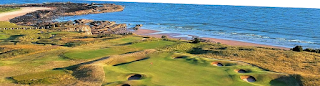
If you play there on a Sunny day, it is a gem of a course. Near to St Andrews a lot of golfers bolt it onto their Scotland Golf Tour. 
www.standrews.com/Play/Courses/The-Castle-Course The website alone has fantastic views of the course and scenery. 

Captain Golf


Kilspindie
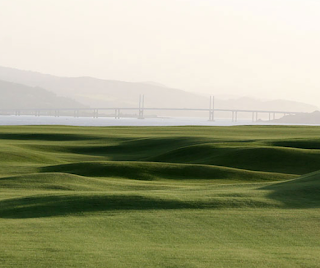
Although quite small in yardage, the Kilspindie course makes a good practice round prior to your golf tour in Scotland: www.kilspindiegolfclub.co.uk. I had a shocking round but enjoyed the views....

Gullane
Gullane is also worth a cheeky mention, great fun and challenging: www.gullanegolfclub.co.uk. On this occasion I rented a new Taylor Made M3 wood, which worked well on its first outing. My playing partner somehow got stung by a wasp before the round on his hand....yet still managed to finish the round! Good courses at Gullane.


*Credit/source for Castle Course/Kilspindie/Gullane images from the respective golf club websites/public galleries.

Links Open Golf Courses- How to Make it Happen....

Why not look to play a Open Course with your golf buddies. Usually you will have had to book in advance (circa 6 months- 1 year), and often pay circa £250 per round. However these are simply great great courses and a great golf experience. 

How do you make it happen? Contact the golf clubs directly or go through a golf booking platform such as: www.yourgolftravel.com  and www.golf breaks.com 

Thanks for reading, tune in for the next update.

Take good care,

Captain Golf
www.captaingolf.golf
captaingolf.blogspot.com


Are Golf Courses Open during the Corona Crisis? - Captain Golf

Hello all.

I hope you are taking good care in these tough times.

Many of you are longing to get back out on the golf course. Your carpet indoor putting skills are no doubt top notch....and coffee mugs dented as a result.

Are Golf Courses Open Right Now in this Corona Crisis?

On the 23rd of March Golf England announced that all golf courses were to close.
(https://www.englandgolf.org/clubs-and-courses-must-close-covid-19-update/)

Captain Golf

At the time of Blog post, this is still the case! It may well change soon if and when the government announces a change to the phased locked down.

What Happens to a Member's Membership Fee due to Lock Down ?

As we approach the peak golf season in the UK many golfers will have already renewed their memberships. The fees crucially go back into the running of the golf club and the up-keep of the golf courses. If the membership fees are frozen this can lead to cash flow problems and impact the running of the golf club.

Many will have taken steps to reduce the running costs of the club, possibly furloughed staff and leveraged help from the UK government.

For many golf clubs, a lot of hard graft will have already have gone into the course for the coming season, prior to the Corona crisis. This should mean the golf course could well get into great shape once the lock down is over.

Membership fee policy will vary by golf club, however they will certainly be eager to attract new members in the future months. Expect peak demand and booked out tee times.

What might happen once lock down is reduced?

Golf requires an open space. A maximum of four players per round. We might well see tee times adjusted so there is a greater gap between golf tee off times, likewise the round reduced to a two ball, such measures might reduce 'contact'. With golfers wearing gloves, possibly a face mask, contact with other golfers will be reduced. The 19th hole might well stay closed or only offer that 'takeaway' beer for the beer garden where seating gets spaced out.

What is the situation with the PGA, European Tour, The Open.....

The Open: The R&A announced the summer tournament would be cancelled. Having been to The Open in Northern Ireland last year this is a big disappointment but it clearly does not make sense to have over 200,000 visitors mingling and in close proximity.

The Open was due to be played at Royal St Georges 11th-18th July 2020. Instead it will be moved to 2021 and the St Andrews tournament moved to 2022.

The PGA Tour: Events were cancelled but I understand there will be four events played without crowds and the situation reviewed thereafter.

European Tour: At the time of writing tournaments have been cancelled or postponed. To be confirmed but it could well start again but behind closed doors and be on TV.

Final Thought

Golf is a great sport and gets you outdoors. However, we need to take good care and follow the guidance of officials. When we do get the green light to get on the course, you will enjoy it double the amount. In the meantime why not compile your bucket list of golf courses to tick off.....We will look into bucket list golf courses to play in the coming blog editions.

Next Golf Blog

Take good care, Captain Golf

www.captaingolf.golf
www.captaingolf.blogspot.com


The Return of Captain Golf 2020

A big hello from Captain Golf.

In - light of the Corona 19 situation and unable to get back on the golf course, Captain Golf makes a return. 

The journey from a complete novice to that of a 20 handicapper continues....

I have donned the 'golf cap' and returned to discuss your golfing needs, hot golfing topics, views on golf and update my adventures/journey to become single handicapper.

Forward/invite golfing buddies to join our community and flag any topics you would like to be discussed.

Take good care and see you on the next blog!

Captain Golf....

Captain Golf


How To Become a Professional Golfer


Golf
So…we see golfers on the tele, they show great composure, confidence and play some of the best golf courses in the world. How do they get on/in the box? Todays blog entry identifies the path/route to becoming a professional golfer.

How do you become a pro golfer?
Firstly the younger you start the better the chance of success.
Starting young should give you more practice time/hours on the range. However there are various conflicting 'schools of thought'. Some argue it boils down to just a 'hard work ethic/sacrifice' and/or 'natural talent'. However there is some good news if you are in your late twenties or thirties. According to PGA website :

'Golfers sometimes don't make the grade until as late as their mid-30s. If it's your dream - don't give up.'
(Source: http://www.pga.info/AboutThePGAPro/33811381.htm)

How do you make the dinero?
The majority of golfers put bread on the table through coaching and affiliation with various golf clubs. Tournament golfers on the other hand are an elite few, the majority of the profession do not feature on tour. Part-taking in competitions on Tour can be expensive. If you
leave your job as an accountant and become a professional golfer, the bank manager is likely to 'gulp' and remind you of your mortgage repayment(s). You have to pay entry fees, hire a caddy, pay for a top coach, travel+accommodation expenses. Unless you make the second cut it will be an expensive folly. However if you are fortunate to 'bolt on' endorsements, the financial burden can be eased.

How do you make it as a PGA Pro.
According to the www.pga.info website, the PGA organises in excess of 900 tournaments a year with prize money amounting to 3.5million plus. Becoming a PGA Pro equips you with a broad understanding of not only playing golf but but understanding the role of golf club management.

The PGA states you can become a PGA Professional golfer via two ways:
1) Register as an assistant at an affiliated PGA golf facility, there trainees undertake a three year Foundation Degree in professional Golf Studies-accredited by the University of Birmingham (source: www.pga.info)

2) To undertake a three year BA Hons Degree in Applied Golf Management Studies at the university of Birmingham.

How to make it as a Tour Pro on the box...
Many folk become a PGA Pro initially, it acts as a safety net and gives the golfer something to fall back on.

However to play in front of the crowds and have the chance of winning great sums of dinero, the European Tour is the scheme to get into.
My understanding is that there are 135 score cards available, amateurs have to compete at the tour School at San Roque for around 35 score cards (ibid). Another tour which is seen to be a 'feeder' to the European Tour is the 'Challenge Tour'. An interesting article on the 'European Tour' website summarises the difference:

“I think the main difference between The European Tour and the Challenge Tour is the golf courses. The courses on the Challenge Tour don’t seem to be as difficult as those on the main Tour, but the guys on the Challenge Tour go low every week. You have to make a lot of birdies to have a chance to win there.”
(Source:http://www.europeantour.co.uk/default.sps?pageid=127&pagegid=%7BAEFB93B0-EFF5-4C05-AB0F-FD08D947D944%7D&eventid=2006754&infosid=3&pageno=1&reportid=53632)

Other notable Tours include:
PGA America (not confirmed)
LPGA Tour (1950)
European Tour (1972)
Japan Golf Tour (1973)
Asian Tour (1995)
Challenge Tour (1986)
European seniors Tour (1992).

Overall
In a nutshell, you have to be good, whether it is down to sheer talent, a hard work ethic or both, it is tough and competitive. You will have to compete for given playing cards, and to do so you should be a scratch to four handicap. Captain Golf can conclude that it is possible to make a living from golf, but difficult. So get down to the driving range....

Next Golfing Blog
-The next Captain Golf blog entry will look at wacky places to play golf.

-Lastly,good news, the rib is on the mend, roughly two more weeks until Captain Golf returns to the range....

You can contact www.captaingolf.blogspot.com via cgcaptaingolf@gmail.com

If you have enjoyed the above, help spread the word and forward the link to a couple of folk...

Do Golf Club Brands Really Matter?


Now, we have all been there at school, at that age many of us are brand conscious, there is a pressure to 'fit in', 'be cool' or follow the 'cool one'. Whether it is trainers or the latest gadget.

From an increasingly early age, I think we are becoming more brand conscious.

The key question is 'does brand matter when it comes to golf?'

How does the golfing community feel about this? Is it more of a 'I am considerably richer than you' mentality or perhaps 'street cred' (maybe even a combination). Or does the brand actually make a difference to the quality of the club and thus ease of use and +ve impact on one's game.

One could assume a more expensive piece of kit is better, think of the R & D costs involved in its development. Yet in my local sports shop I have seen £20 Drivers ($30) one end and £200 ($250) the other end of the spectrum.

Crucially could two people of similar ability (i.e. consistently the same) over say 100 drives over a week (to remove anomalies) drive a ball on average the same distance and roughly in the same target zone? One using the £20 club and the other the £200 club. Such a test would produce a heroic piece of data. I hope some of you reading this will take this challenge on and please post your findings.

One thought is, a more expensive club, comes with it an entourage of marketing and branding. Psychologically I guess we feel 'better' and perhaps more confident if we consciously have a more expensive club, and that, combined with the 'street cred' , one hits a better shot as a result. Thus one might conclude the advantages of a more expensive club are psychological which in reality results in a better shot.

Next Blog Entry
The next blog entry will delve into lesson three of the golfing journey....

Links
If you have enjoyed the above blog, add a link to www.captaingolf.blogspot.com and spread the word. You can also email me at cgcaptaingolf@gmail.com

Poll
Don't forget to look at the poll. Does the brand of your golf clubs make you a better player?

Golf Language

The Lingo of Golf....

Photo by Steven Shircliff


Hello ladies and gentlemen. Pull up a chair, today we look at 'golf terminology' (CLUB TYPES, DISTANCE, HANDICAP, BIRDS.....)

Golf can be an intimidating sport and one particular barrier is the lingo. I have a theory which can be applied to both golf and cricket. Golf and cricket are terrific sports, yet quite often those who dislike both or perhaps one or the other, when asked, do not fully understand the rules/principles. It is only when the lingo is explained and the core basics explored they begin to understand/like the sport.


In the words of Tom Jones 'its not unusual' to fall in love........with golf. It is also.....'not unusual' for folk to view golf and cricket as 'boring' or 'weird'. If folk were not introduced to such sports from an early age, or were in fact badly instructed (perhaps putting them off the sport altogether), it reduces the probability of them actually 'liking' the sport. With that view, I think there are far more people out there who have the potential to actually like the sport, enjoy it and try it. One of the founding pillars of this blog is to introduce more folk to golf and show what it has to offer. If one more person tries or begins to appreciate the world of golf due to this blog, then it has been worth the journey. Before we get all emotional…let us continue….

Back to basics is the message of today. Here I have attempted to mention the key terms, using them in the context of actual play. Let us begin….

Ok, you start the day at the golf club. You have your bag of clubs, quite often half a set. The rules state you can only have 14 golf clubs at one time.

CLUB TYPES

You put the tee in the ground at the 'tee box', if you are to 'tee-off' with a wood or an iron, the tee height is adjusted accordingly. A 'wood' is a name given to a golf club and has a wider club face when compared to an iron. The first clubs I used were from from my father and yes the woods were in fact wood, there were some strange looks at the driving range. Since the 70's, 'golf clubs' have come along way, many of the 'woods' are now made with the latest technology and best metals with different 'sweet spots'. A 'sweet spot' is an area/zone on the club face, when on contact with the ball will produce the most power 'umph'. Where the ball will actually end up, will largely depend on your 'grip/clasp' of the club, swing style and general posture. Golf is a game of many variables, different variable ratios will ultimately determine if you have a good round. Golf lessons are a great way to influence such variables and in fact improve the outcomes.

DISTANCE AND CLUBS

Before hitting the ball, you will have decided the club type. How? This is usually based on the distance from the tee to the pin (i.e. hole). Generally you will face a combination of Par 3, Par 4 and Par 5 holes. The higher the 'Par', the lower the club number needed. The lower the club number, the further the ball should in theory go. On a Par 4 or Par 5 you would use the driver from the tee (also known as a 1 wood). The closer you get to the tee, the higher the golf club number used, until you get so close a PW or SW are required for a cheeky chip onto the green.
The 'Par' refers to the number of strokes it should take you to get the ball into the blasted hole. How you fair, under or over par, will decide your score. A PW is known as a 'pitcher wedge' usually used around the pin or on the approach. A SW is known as the 'sand wedge' and used in the sand bunker, or again around the pin/on approach.

HANDICAP

The score is recorded in the score card. Your score is decided on your handicap. Handicap, what is a handicap? A handicap allows players of mixed ability to play against one another and truly makes golf a game all can play. Handicap is basically the number of strokes it takes you over 18 holes. A scratch golfer would have a handicap of 0, whereas a beginner like myself would play off 28, the highest (i.e. worst) handicap used. Over 18 holes, you would have 28 strokes more than a scratch golfer. So for example on a par 5 hole, you would have 7 strokes to get a 'level' par. A par 5 hole, would in fact be a par 7 for the 28 handicapper.

According to the Stableford scoring system:
2+ par=0 points
1+ par=1 point
par= 2 points
-1 par=3 points
-2 par=4 points
-3 par=5 points

If you got the ball in the hole in 6 strokes, according to your handicap you would score 3 points, as in theory it was -1 par (7 being the par due to your handicap). Whereas a scratch golfer would only get 2 points if they got the ball in 5 strokes. Over 18 holes, the points snowball, but are dependent on the ability of the given golfer. The better the golfer you are, the lower the handicap. To establish the net score, you total the number of points gained per hole.

Generally over 18 holes, the total par can range between 69 and 73 par depending on the combination of par 3,4,5's on the course. Thus on a 73 par course, a 28 handicap player will in theory be playing a 101 par course (due to the allowance of an additional 28 strokes). Clear as mud? We will come back to the above in future editions.


How do you get a handicap? Well you can not buy them on Amazon or Tesco. Many golfers have an 'unofficial' handicap (an average over courses played todate), but to play in competitions you need an 'official' handicap. You get one of these from a golf club or a national golf association.

Some courses are restricted to golfers with certain handicap levels. Why? Perhaps elitist, but guarantees a fast game of golf. If there are too many 28 handicappers on a round, it will take longer for the hole to be cleared and will create a back log. If you are new to the game and others are waiting or catching your round, keep your cool. Everyone started somewhere, and they probably hit much worse! Instead the form is to wave such golfers on and let them overtake you.

A round of golf usually involves two pairings. Two teams will be formed and the points totals tallied after the 9th and the 18th to see which team are the winning pair. Its then back at the 19th hole (the 'pub') you relive the journey, the good times and the bad.

HOOK AND FORE
Ok…you have teed off. You have hooked it, this means you hit the ball out to the right. On your second stroke you hook the ball again and see the ball heading for another group of golfers on a parallel hole. Golf insurance would be handy. The standard procedure is to yell 'fore', and with a bit of luck the golfers in danger will 'dive' to safety (away from the ball not towards it).

BIRDS
Birds….This is another gem of confusion. Albertross, Birdie....

3 under par= Albertross
2 under par= Eagle
1 under par= Birdie
Level par=Par
1 Over par= Bogey
2 Over par= Double Bogey
3 over par= Triple Bogey

An 'ace' is a hole in one, if you get one of these bad boys it will be a great achievement. Although the wallet will hurt, general form is buy everyone in the club house a cheeky pint.

SUMMARY
Ok to wrap up. Here we have looked at clubs, type of club, handicap, types of shots and names of given birds (the golf variety). In future editions we will look at further terminology and progress.

Next Blog Entry
The next entry will look at how you become a pro, how do you get on the top tours. What are the steps/procedures?

If you have enjoyed reading the above, spread the word and book mark the above page.

You can contact captaingolf at cgcaptaingolf@gmail.com with any wise words/tips.

You can also catch up on the blogs from last month by clicking the given link on the right,

See you soon

captaingolf

----------------

Eco Golf

Golf and the Environment


Good day ladies and gents. 'Golf and Climate Change', it sounds like an epic subject/topic. I would take a seat, but I am in fact sitting. When you think of a traditional golf course, one might assume that there was deforestation, inhabitants moved and local wild life affected. This is potentially a hot topic.

A true trade off is the economic benefit brought to an area that comes along with a golf course vs the economic significance of 'nature' (which some might argue is priceless) but not reported/quantified on an organisation's balance sheet. Hence some folk may argue it is 'valued less' as a result. Let us continue....


Golf courses can certainly bring economic benefit to an area. Think of the jobs, from course construction, to restaurant workers, shop employees and the network of suppliers connected to the course. Just because a golf course is/was built, does not automatically mean a trade off, golf course =harm to the environment, or no golf course=good for the environment. The management of a golf course can do much to make 'their club' greener. With the business world becoming 'greener', and climate change firmly cemented in the world media (and rightly so), there is arguably a drive for golf clubs to too 'become greener' and adopt better practices. This would not only apply to those courses under current construction, but those already in existence.

Would a green golf club be a better club than a non green club? The environment/world would be a better place if every golf club in the UK recycled 50% of rubbish, or installed energy sufficient technology. It is through collective change that a greater change regarding the climate can be brought about.


Initially what may begin to be a niche, I predict will evolve and become mainstream. Although difficult to quantify, a given percentage of golfers may restrict their course play to those clubs which are seen to be 'green' or behold eco-accreditation. If golfers voted with the £ in their wallet, other courses would be forced to adapt/change. Going green may in fact save a golf club revenue and improve efficiencies. For example a water wheel on a river running through a course could lead to the generation of cheap energy (over the longterm). Other forces at work which may make a 'club play ball' are legislative measures. If X number of companies are forced to adapt, due to legislation, change would be enforced and enshrined.

An interesting organisation that caught my eye was NGO, the National Golf Organisation, their mission is to protect the environment and introduce better and greener practices to golf courses around the world.

The green club is here to stay, which can only be a good thing, but the key question is how will the uptake increase over time and at what rate....and will it lead to a more expensive round of golf?

Next Blog Entry
The next entry will take a look at some of the golf lingo to help any beginners adjust to the great sport....

If you liked the above take a look at the blog entries for the month of February located in the archive in the right column.

You can contact www.captaingolf.blogspot.com by emailing cgcaptaingolf@gmail.com. See you soon comrades....

Bad Rib + Golf Swing= Golf Not Possible

No Pain No Gain

Good day ladies and gents. A fine day it has been, in the words of Finley Quay, the sun is shinning the weather is sweet 'oh yeh'.

I am afraid there is no zen golf entry this week, the link which was to be used has disappeared into the abyss. We must therefore reflect and move on, Amen brother.

So..what has happened over the last week?
Captain golf injured his ribs on Monday. No I was not injured on the course and taken to A&E in a golf buggy, instead, having achieved success at the driving range, I played 5 aside football in the evening and took a wack to the upper rib cage, a golfer's nightmare. As a consequence, the golf lesson today was postponed. This was to be lesson 6 out of a new batch of lessons. Coach was to improve my short game on the course. Alas, friends I hope to be back in action in a week or so, ie on the course and driving range. Did we win the futebol? No, we lost and in fact got relegated (on goal difference, by one goal)....not a good day at the office.

Managed to get the rib checked over in the 'walk in' A & E but appears to be badly strained. Very impressive, only a 45 minute wait, hats off to the NHS, there has been improvement.

Bytheby, 'No Hard Hats Needed-lesson Five' is on the way soon. www.captaingolf.blogspot.com will also be including more photos/comical links in future versions...so stay tuned folks...

Next Blog Entry

The next blog entry will take a quick look at golf and the environment. Can golf be good for the environment? We will see.

Regards

captaingolf

No Hard Hats Needed- Lesson Four

No Hard Hats Needed- Golf Lesson Four

Quite a lesson. Lesson four out of five. The coach issued a new swing which would take approx two months to implement. So drumroll, in two months we will review this golfing lesson and see the results.

What did the swing involve? Well I can conclude that it did not involve anything you would see on Strictly Come Dancing. The swing involved a twist of hips but no 'cha cha cha'.
Having twisted slightly, I leaned to my left (allowing the hip to twist but stay in line) and kept the baseball cap to the right of the ball. On swinging the club, I was informed it should not go horizontal (i.e. not like the legend John Daly) but stop mid air, with a straight left arm.

So how are these mechanics translated into practice? Well with difficulty, with so many mental 'checks', you might forget that you need to hit the ball. Alas, tricks of the trade include using a long mirror often located at a driving range and found in the teaching area. You should get some electrical tape and place two lines on the mirror.
Yes folk may assume you are a wee bit weird, but it should help. Why use the mirror and electrical tape? You need to ensure that the head and hip do not move beyond the parallel lines. When using the technology/video system to analyse the mechanics, all the pros maintain a movement within a 'certain' range. When your movement (i.e. a beginner like myself) breaches the given parameters/range, it will result in a duff shot.

Did it make any difference? 'Yes' and 'no' is the answer. Some horrific shots but one or two good ones. Coach advised that Faldo when training was not allowed to hit a golf ball for 6 weeks….the drill was to simply practice the swing/movement. So practice is needed.

A couple of days later I made another outing to the driving range.
This was a good decision. Things seemed to click. I managed to hit around 30 balls using this technique, with no duff shots. Although still difficult when moving between the driver and the irons to maintain the consistency.

Key Criteria Learnt From Golf Lesson Four:

-Practice the mechanics, stance and swing.
-Be patient and refrain from hitting a 1000 balls until you are confident you have the right 'swing'.
-Practice, Practice Practice.
-Use a long mirror if possible.

The Poll Results
Does the brand of your golf club make you a better player?
The results were 'even stevens'. 33% reported 'yes', 50% reported 'no' and 16% were 'unsure'.

I would strongly recommend you read the comment by Mike regarding the blog entry: 'do golf brands really matter?'

He raised some excellent points, and a good comparison with playing a basic guitar (to learn the basics) before then moving on to better kit. Anyhow, have a quick look and please do add any further comments. It was an interesting blog entry and we will return to this topic in future editions.

The next poll will ask the question:

Does a 'water' feature such as a lake or river have an adverse effect on a player's score?

Next Blog….

The next blog entry will look at 'golf photography' and the 'Zen' of the golf course.....

If you have enjoyed reading captaingolf, bookmark the page and spread the word. You can also contact captaingolf at cgcaptaingolf@gmail.com.